
Dynamic Difficulty Adjustment With Brain Waves as a Tool for Optimizing Engagement
Main:3 Pages
4 Figures
Abstract
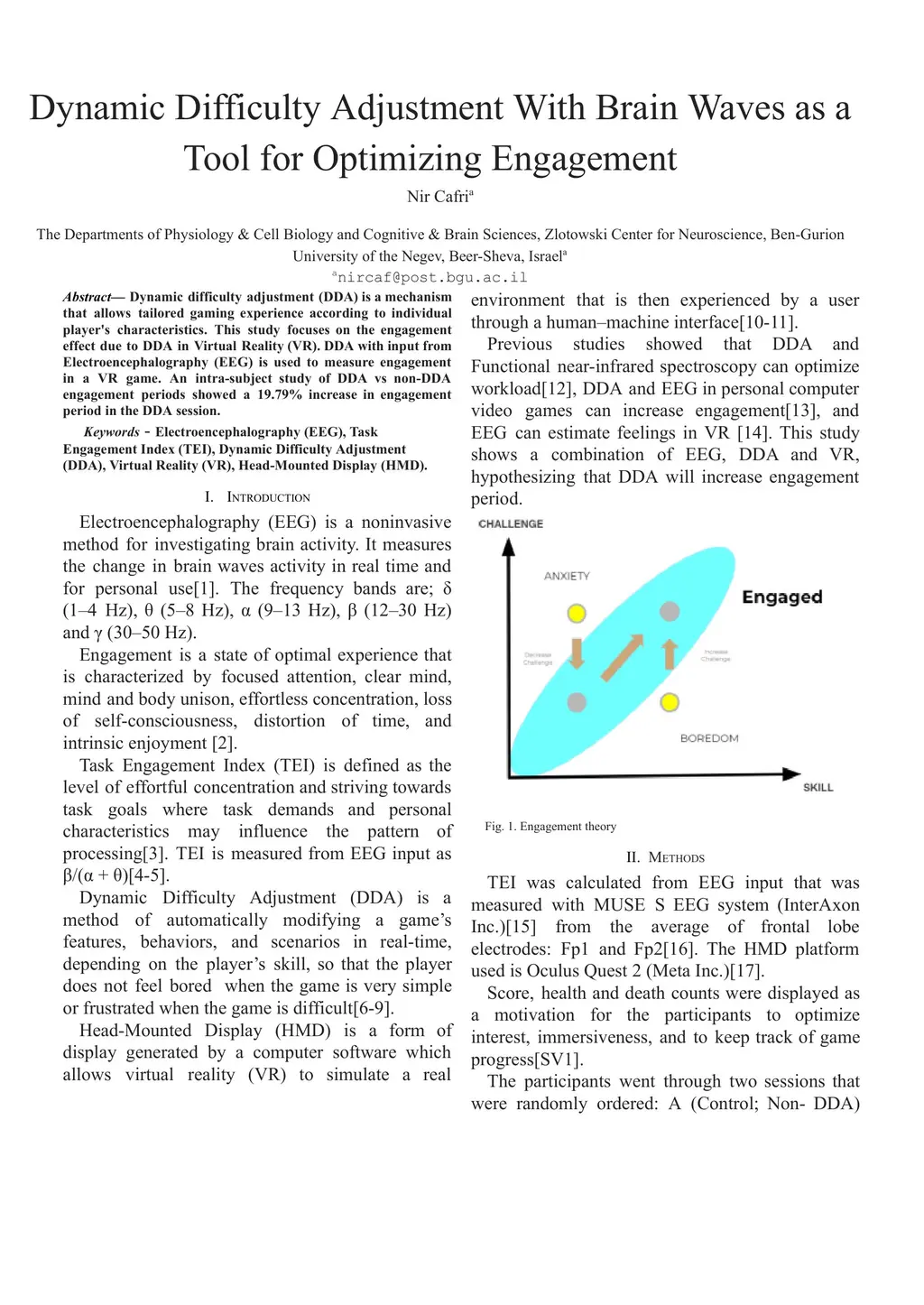
This study explores the use of electroencephalography (EEG)-based brain wave monitoring to enable dynamic difficulty adjustment (DDA) in a virtual reality (VR) gaming environment. Using the Task Engagement Index (TEI) derived from frontal EEG electrodes, we adapt game challenge levels in real time to maintain optimal player engagement. In a within-subject design with six participants, we found that the DDA condition significantly increased engagement duration by 19.79% compared to a non-DDA control condition. These results suggest that combining EEG, DDA, and VR technologies can enhance user experience and has potential applications in adaptive learning, rehabilitation, and personalized interfaces.
View on arXivComments on this paper