
Vibe Coding for Product Design: Understanding Product Team Members' Perceptions of AI-Assisted Design and Development
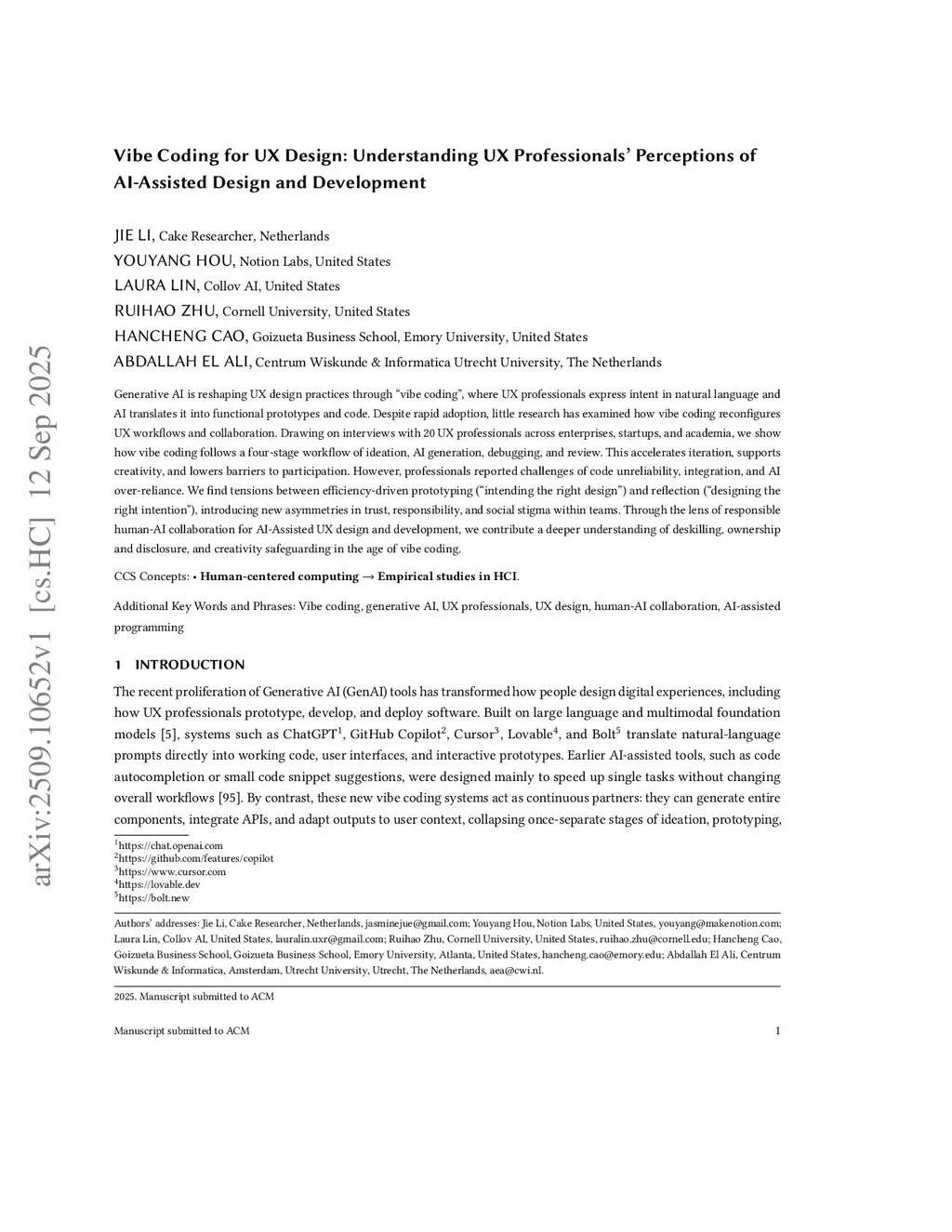
Generative AI is reshaping product design practices through "vibe coding", where product team members express intent in natural language and AI translates it into functional prototypes and code. Despite rapid adoption, little research has examined how vibe coding reconfigures product development workflows and collaboration. Drawing on interviews with 22 product team members across enterprises, startups, and academia, we show how vibe coding follows a four-stage workflow of ideation, generation, debugging, and review. This accelerates iteration, supports creativity, and lowers participation barriers. However, participants reported challenges of code unreliability, integration, and AI over-reliance. We find tensions between efficiency-driven prototyping ("intending the right design") and reflection ("designing the right intention"), introducing new asymmetries in trust, responsibility, and social stigma within teams. Through a responsible human-AI collaboration lens for AI-assisted product design and development, we contribute a deeper understanding of deskilling, ownership and disclosure, and creativity safeguarding in the age of vibe coding.
View on arXiv