
When Avatars Have Personality: Effects on Engagement and Communication in Immersive Medical Training
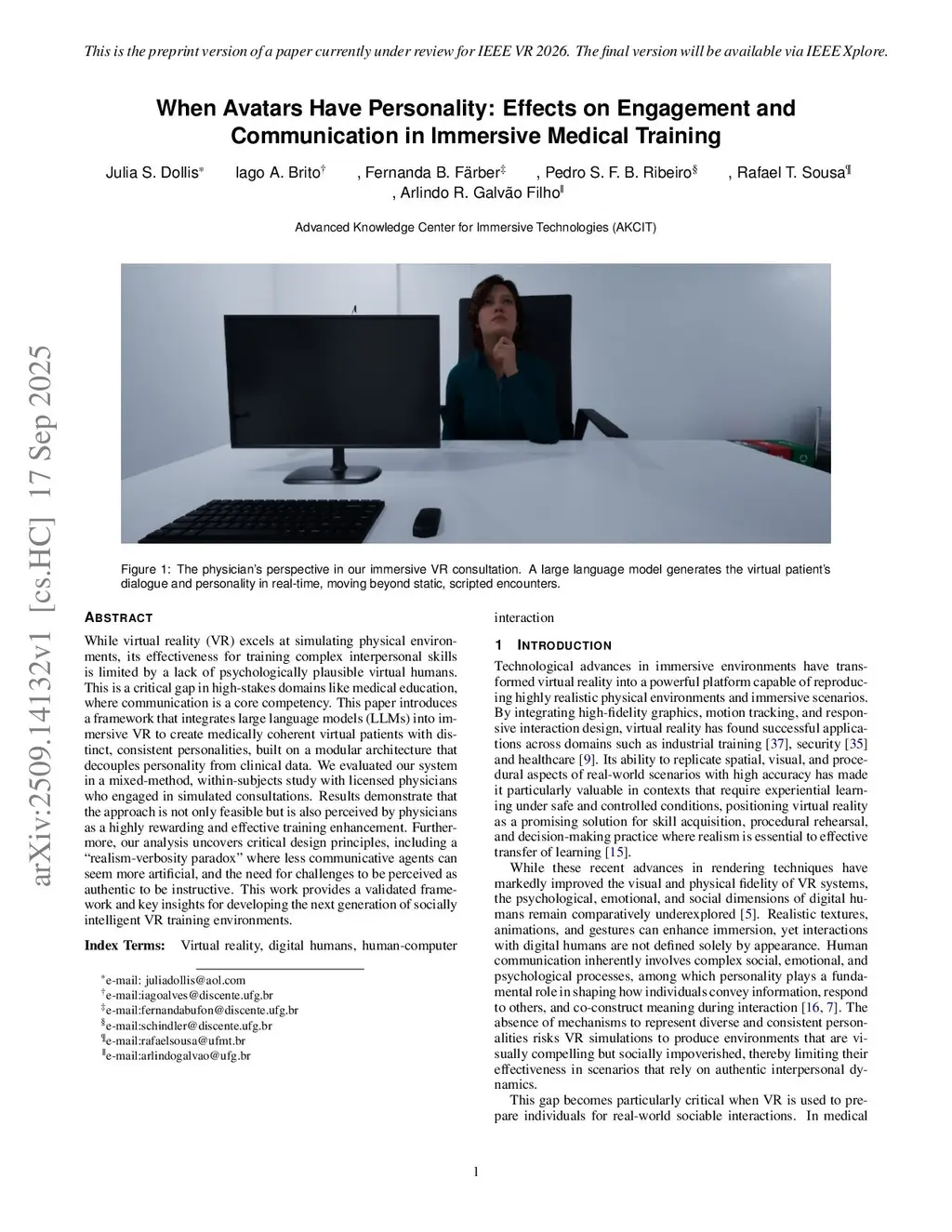
While virtual reality (VR) excels at simulating physical environments, its effectiveness for training complex interpersonal skills is limited by a lack of psychologically plausible virtual humans. This gap is particularly critical in medical education, where communication is a core clinical competency. This paper introduces a framework that integrates large language models (LLMs) into immersive VR to create medically coherent virtual patients with distinct, consistent personalities, based on a modular architecture that decouples personality from clinical data. We evaluated the system in a mixed-methods, within-subjects study with licensed physicians conducting simulated consultations. Results suggest that the approach is feasible and perceived as a rewarding and effective training enhancement. Our analysis highlights key design principles, including a "realism-verbosity paradox" and the importance of challenges being perceived as clinically authentic to support learning.
View on arXiv