
Open Shouldn't Mean Exempt: Open-Source Exceptionalism and Generative AI
- SILM
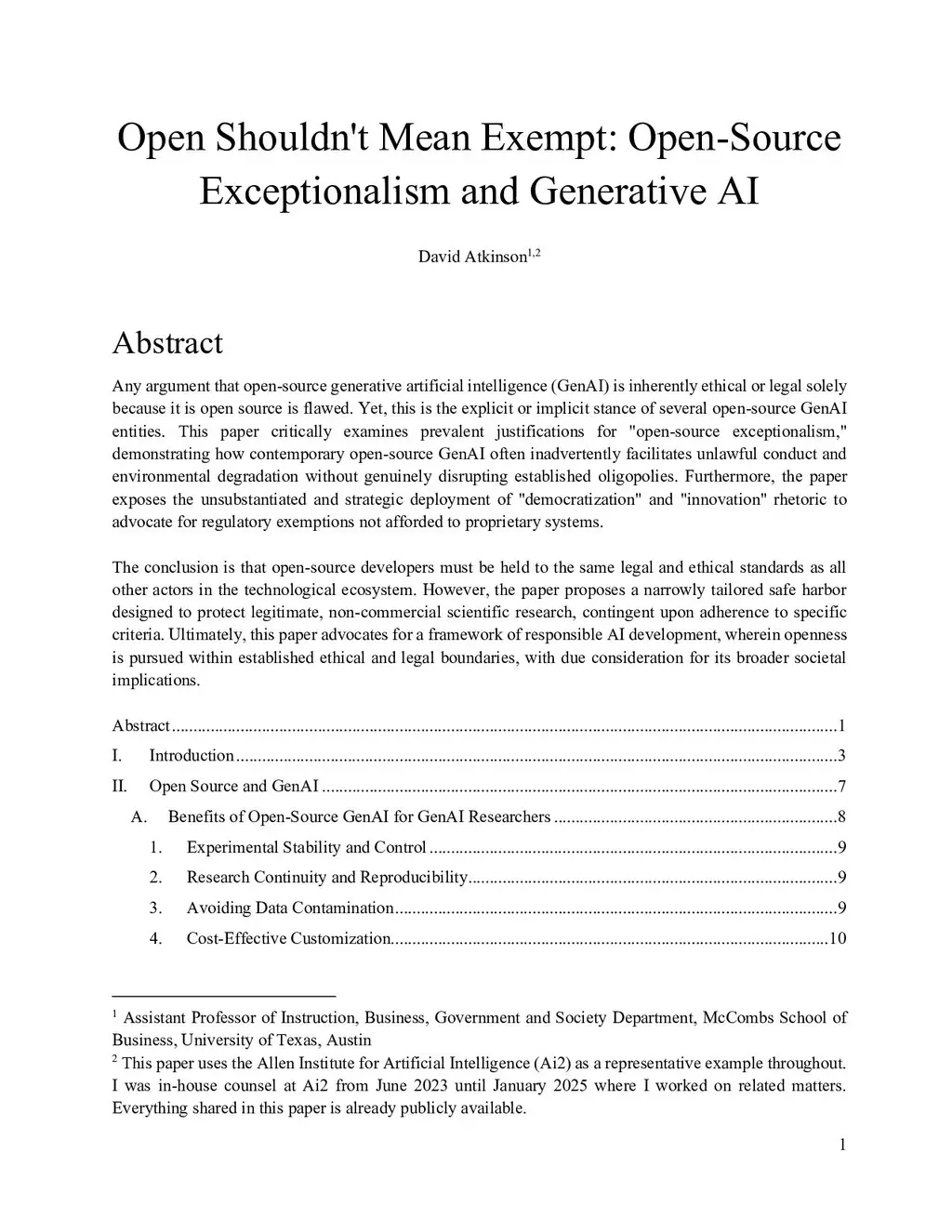
Open-source status should not shield generative artificial intelligence systems from ethical or legal accountability. Through a rigorous analysis of regulatory, legal, and policy frameworks, this Article contends that open-source GenAI must be held to the same standards as proprietary systems. While recognizing the value of openness for scientific advancement, I propose a narrowly tailored safe harbor for bona fide, non-commercial research, conditioned on strict compliance with defined criteria. This Article critically examines and refutes the core claims of open-source exceptionalism--namely, that open-source GenAI disrupts entrenched oligopolies, democratizes access, and uniquely drives innovation. The evidence shows that open-source GenAI can facilitate unlawful conduct, exacerbate environmental harms, and reinforce existing power structures. Rhetoric around "democratization" and "innovation" often serves as an unsubstantiated basis for regulatory exemptions not afforded to proprietary systems. This Article ultimately advocates for a framework that promotes responsible AI development, balancing openness with robust legal and ethical safeguards and a clear-eyed assessment of societal impacts.
View on arXiv